Friendly Fare App
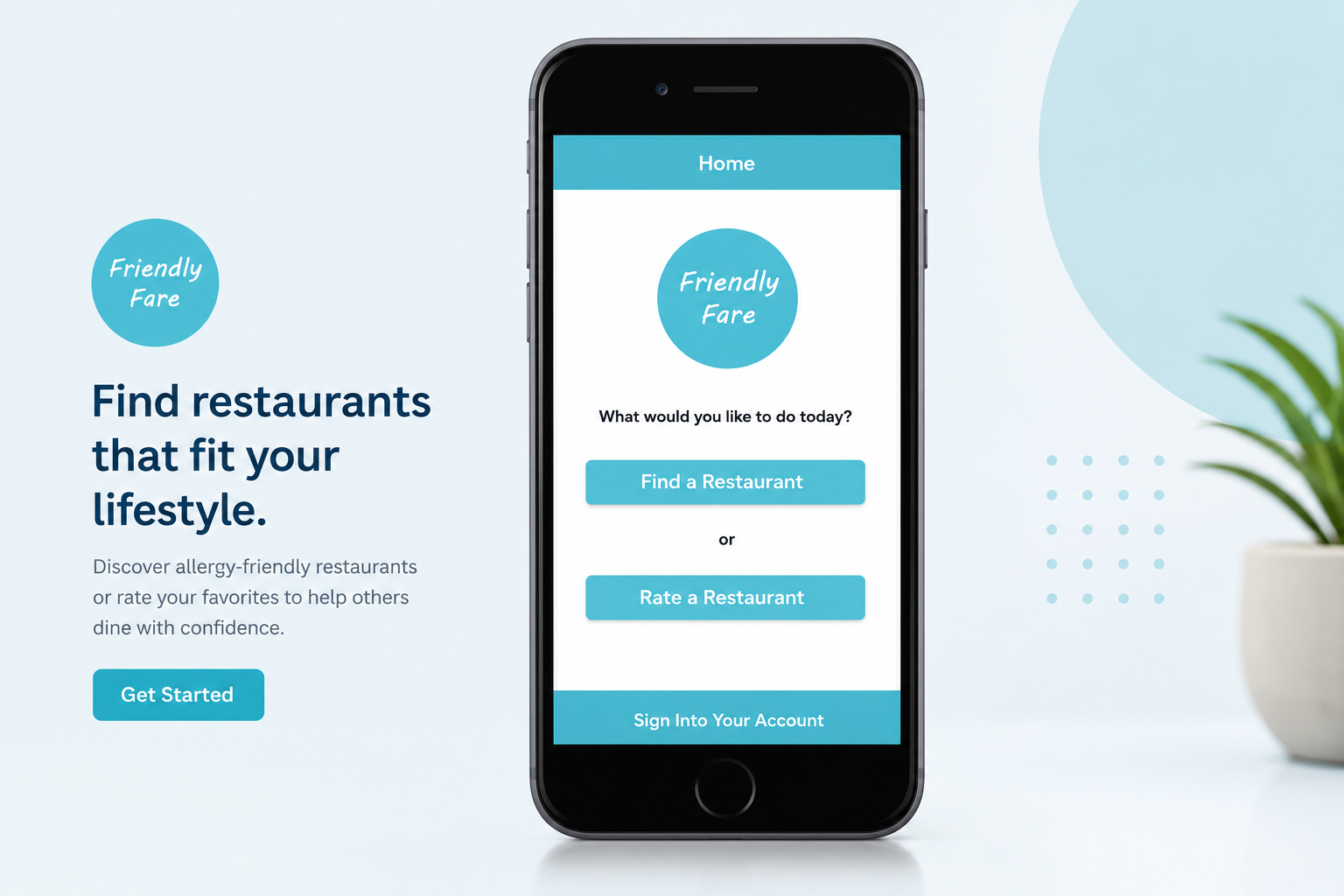
Living with food allergies can make dining out stressful and unpredictable. Existing restaurant apps often focus on a single allergy or provide inconsistent information, leaving users to piece together recommendations from multiple sources.
Friendly Fare is a mobile app designed to help people with food allergies quickly discover restaurants that can safely accommodate their dietary needs while building trust through community-driven reviews.
The Challenge
People with food allergies face significant barriers when trying to find safe restaurants, especially while traveling or making spontaneous dining decisions.
The key challenges included:
Limited trustworthy information about allergy-friendly restaurants
Apps focused on only one dietary restriction
Reviews that rarely address allergy accommodations
No way to connect with others who have similar dietary needs
My Role
I led the project from research through prototype development.
Responsibilities
User Research
Competitive Analysis
Surveys & Interviews
Persona Creation
User Flows
Wireframing
Prototyping
Usability Testing
Iteration
User Research
As someone recently diagnosed with celiac disease, I experienced firsthand how difficult it was to confidently choose restaurants while away from home. Rather than designing from personal experience alone, I validated the problem through secondary research and user interviews.
Industry Insights
15 million Americans live with food allergies.
Food allergies increased by 50% between 1997–2011.
There is currently no cure for food allergies.
These findings confirmed that this was a meaningful problem affecting millions of people.
Surveys
To better understand user behaviors and frustrations, I conducted:
32 online surveys
3 in-person interviews
2 phone interviews
Key Findings
44% of participants manage three or more food allergies
69% dine out only 0–3 times per week
56% spend several days planning where to eat before going out
What I Learned
Users weren't simply looking for restaurant reviews—they were looking for reassurance. They wanted confidence that a restaurant understood food allergies and could safely accommodate them.
“It will mean a lot to me if my child can enjoy a special birthday dinner in a restaurant, rather than just other hot dog somewhere easy,.”
“Someone always seems to have to compromise in the, and its usually me.”
Competitive Analysis
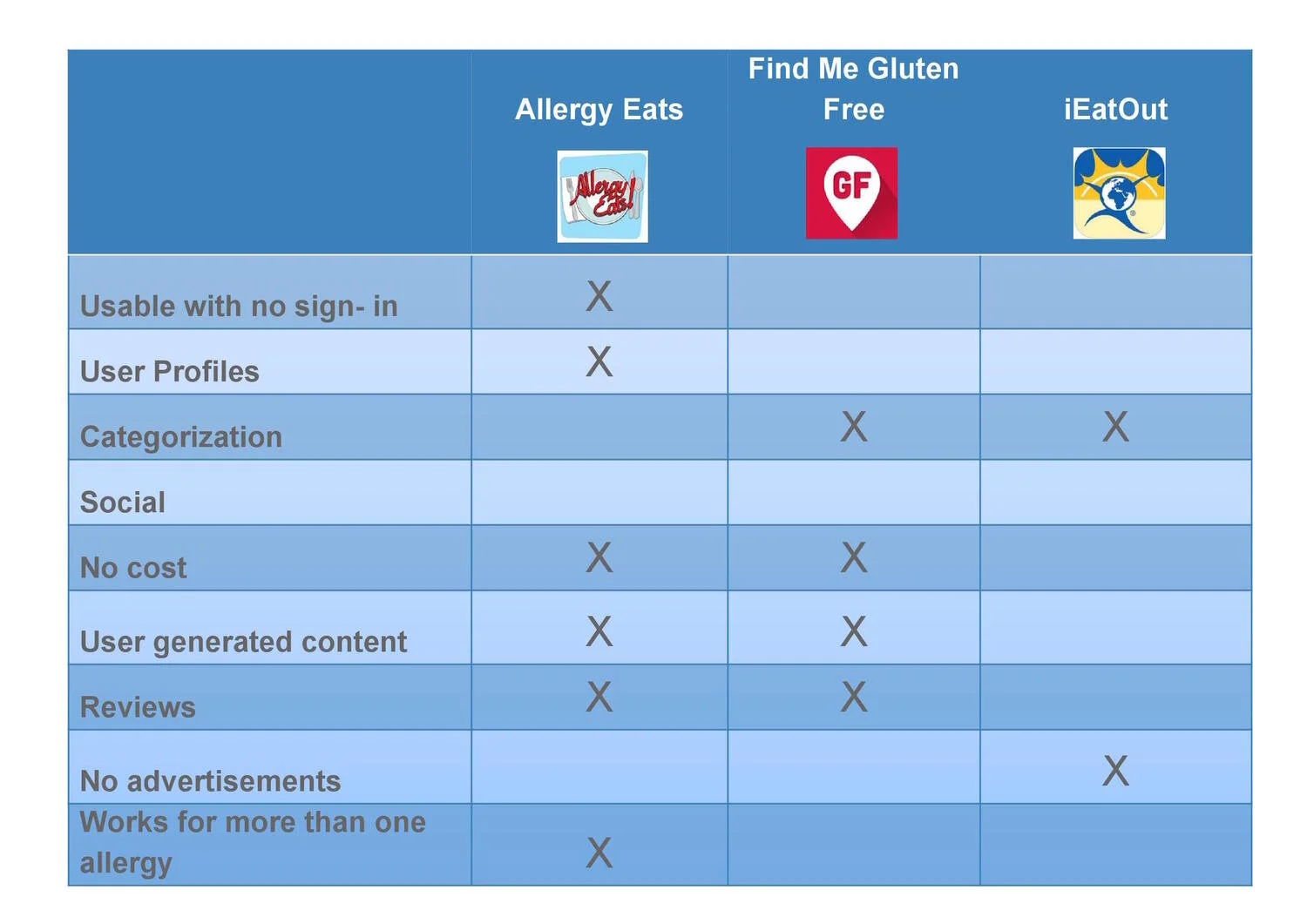
I evaluated existing solutions including:
Find Me Gluten Free
iEatOut
AllergyEats
Opportunities
Although each app addressed part of the problem, several gaps consistently emerged:
Most apps focused on a single allergy.
Reviews rarely discussed actual allergy accommodations.
There was little opportunity for community engagement.
Users couldn't build trust through shared experiences.
These insights helped define Friendly Fare's unique value proposition.
Personas
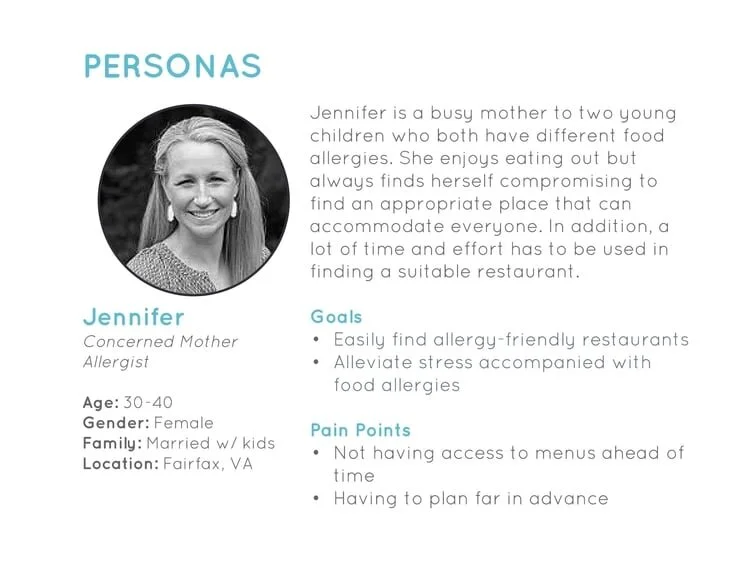
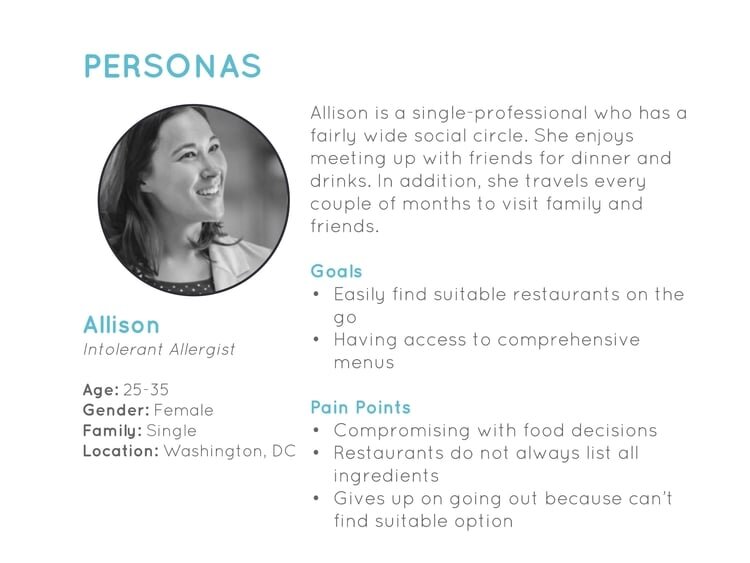
My surveys lead me to create two distinct personas. First there was Jennifer, the concerned mother with kids who suffer from food allergies. While there was also Allison, a busy working professional who enjoys going out but has multiple food allergies. (See below for details.)
Jennifer, The Concerned Parent
Jennifer plans every family meal carefully because her children have food allergies. She needs reliable recommendations before taking her family to a new restaurant.
Allison, The Busy Professional
Allison has multiple food allergies but enjoys trying new restaurants. She needs fast, trustworthy recommendations while balancing a busy schedule.
These personas guided feature prioritization throughout the design process.
Design Process
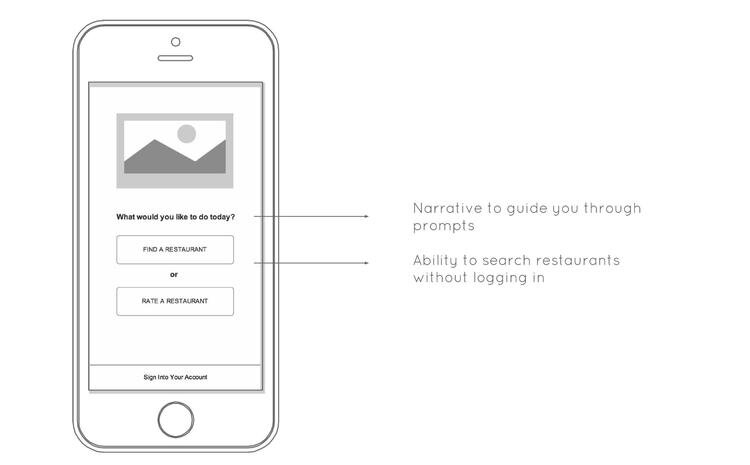
Beginning with paper sketches, I created low-fidelity wireframes before moving into interactive prototypes.
Tools Used
Sketch
Axure
POP
InVision
The design focused on making restaurant discovery simple while emphasizing trustworthy community reviews.
Usability Testing
I conducted usability testing with five participants.
Participants were asked to:
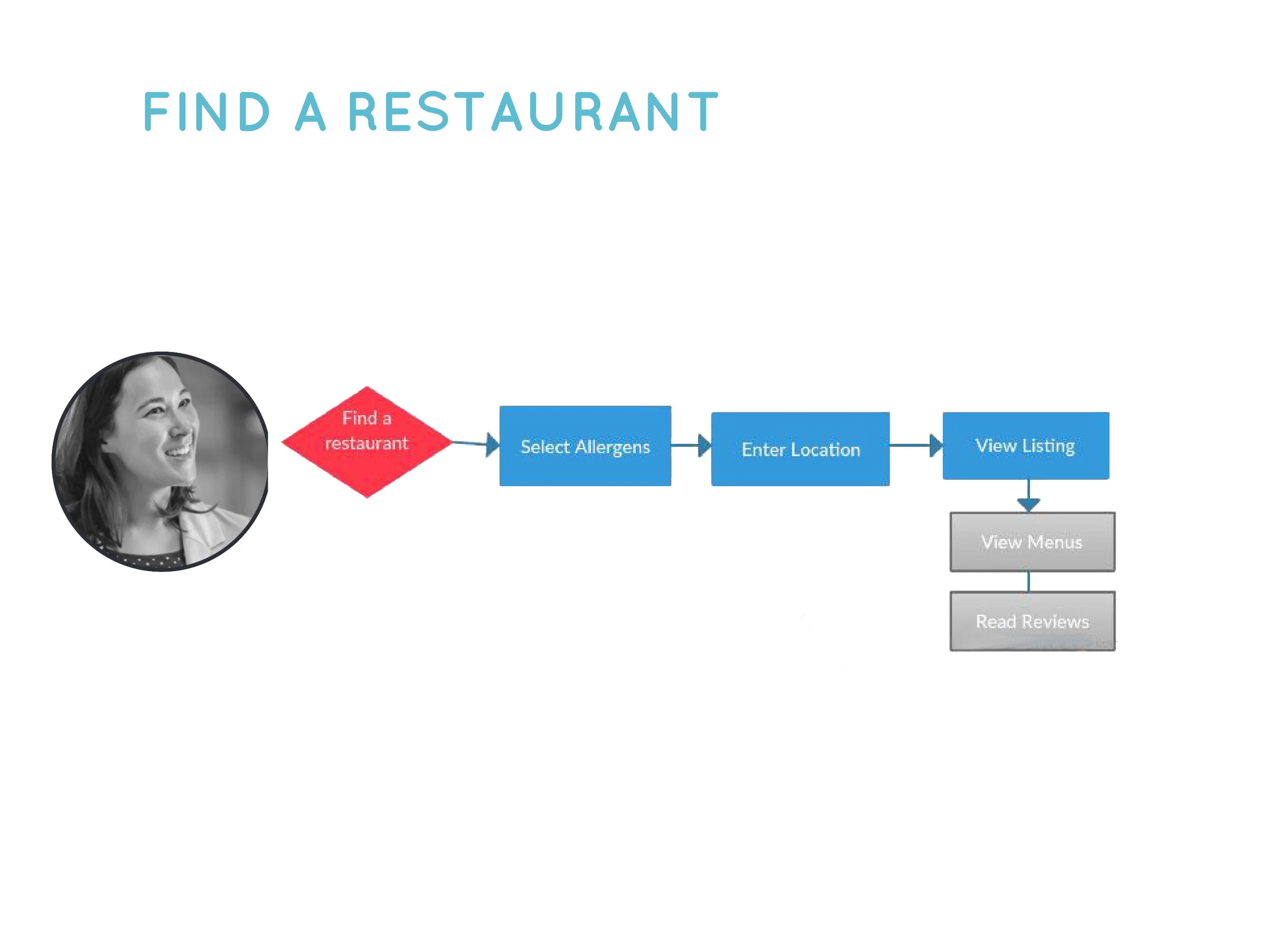
Find a nearby restaurant
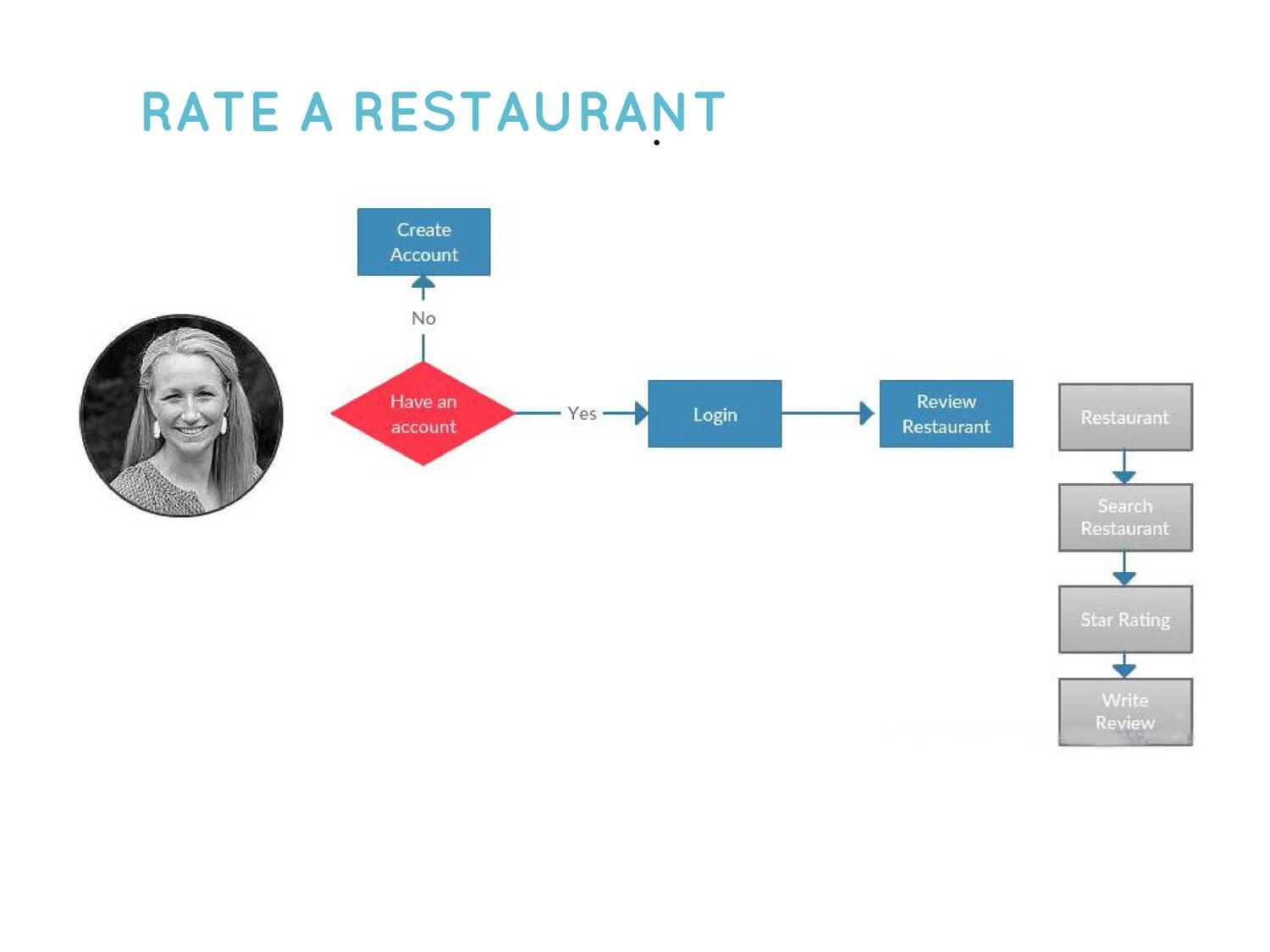
Submit a restaurant review
Key Insight
Users successfully completed their tasks but consistently requested more guidance when first opening the app.
Design Iteration
To improve the onboarding experience, I refined the navigation and introduced clearer instructional cues to help first-time users understand how the app worked.
Solution
The final prototype enables users to:
Discover allergy-friendly restaurants nearby
Search restaurants before traveling
Read reviews focused on allergy accommodations
Share personal dining experiences with the community
The experience emphasizes trust, simplicity, and confidence throughout the user's journey.