Enterprise Design System
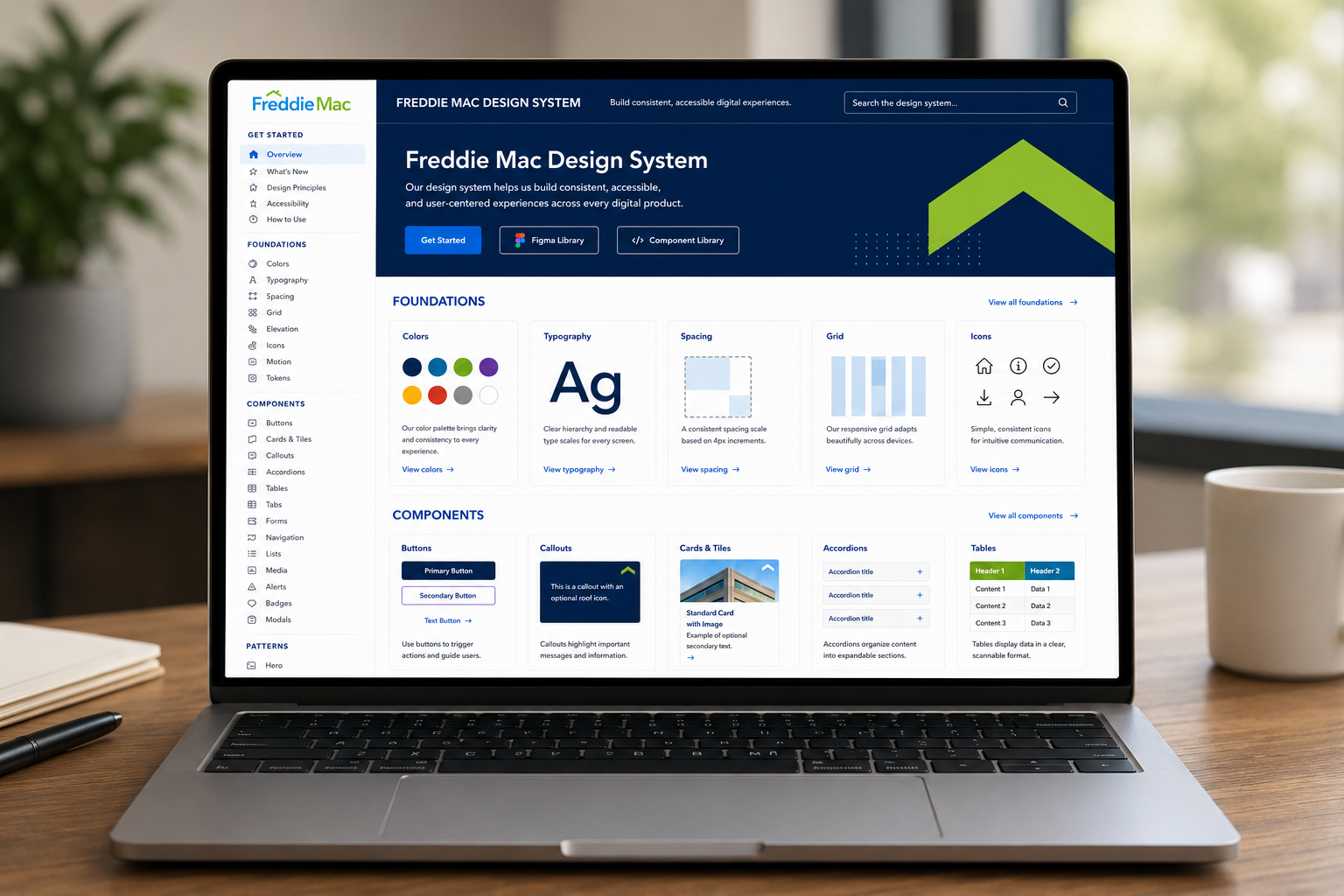
Driving consistency, accessibility, and delivery speed across 1,200+ enterprise web pages.
The Digital Marketing organization managed multiple external websites that had evolved independently over time. Teams frequently created custom UI components, resulting in inconsistent customer experiences, increased maintenance costs, accessibility gaps, and slower product delivery.
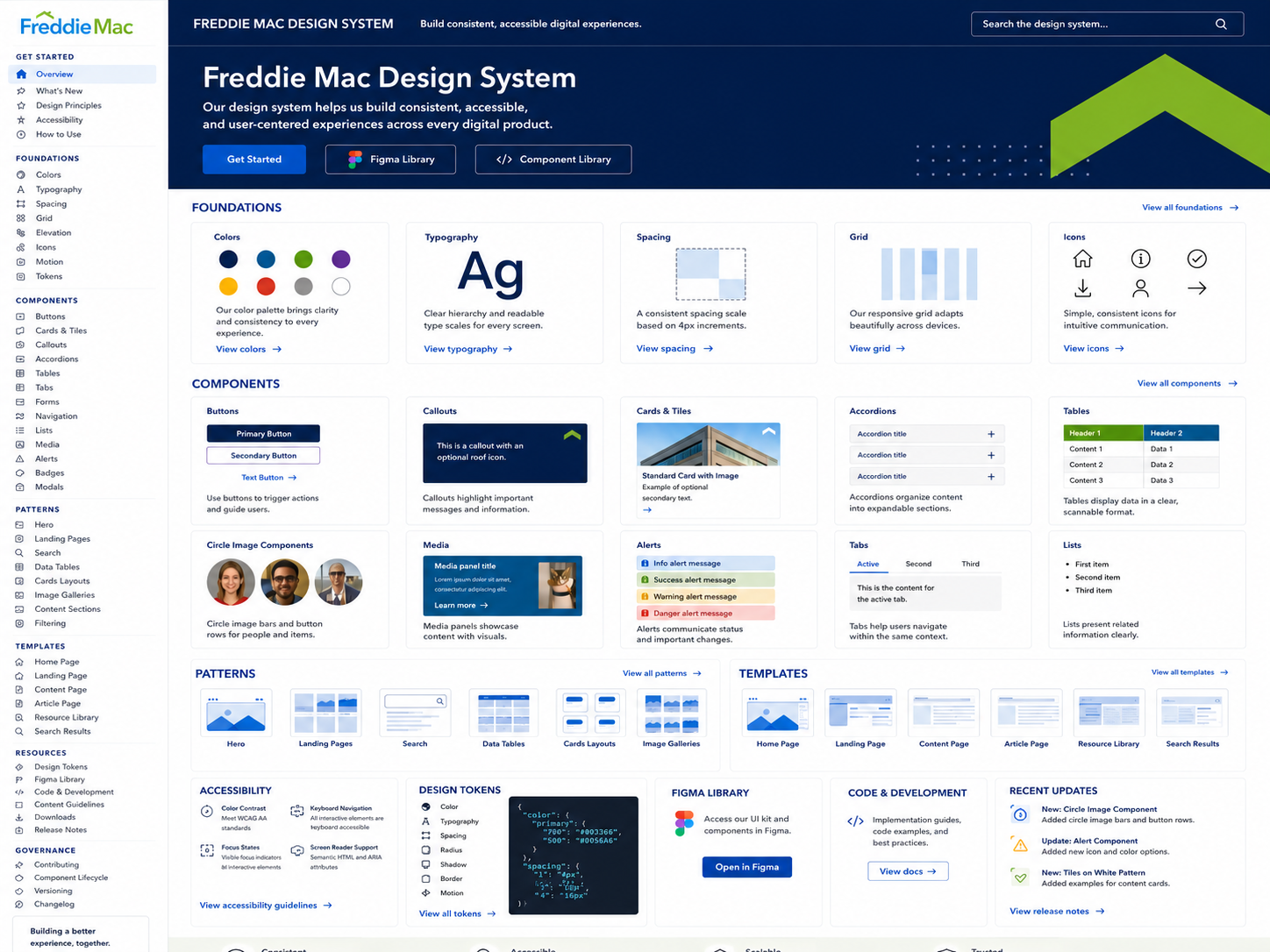
To address these challenges, I led the product strategy and delivery of an Enterprise Design System (EDS), transforming it into a shared platform that standardized reusable components, improved governance, and accelerated delivery across all external marketing websites.
The Challenge
As our digital ecosystem expanded, each product team built components independently.
This created several business problems:
More than 100 custom UI components with duplicate functionality
Inconsistent branding and user experience across websites
High engineering effort spent maintaining similar components
Accessibility compliance risks
Limited analytics due to inconsistent implementations
Significant technical debt from hand-coded elements
Without a standardized platform, product teams were moving slower while operational costs continued to increase.
My Role
As Product Owner, I owned the strategy and roadmap for the Enterprise Design System.
Responsibilities
Defined product vision and roadmap
Prioritized component backlog
Conducted stakeholder discovery
Led component audit initiative
Established governance model
Partnered with Design, Engineering, Accessibility, Legal, and Marketing Teams
Drove adoption across multiple teams
Defined success metrics and measured business outcomes
Discovery
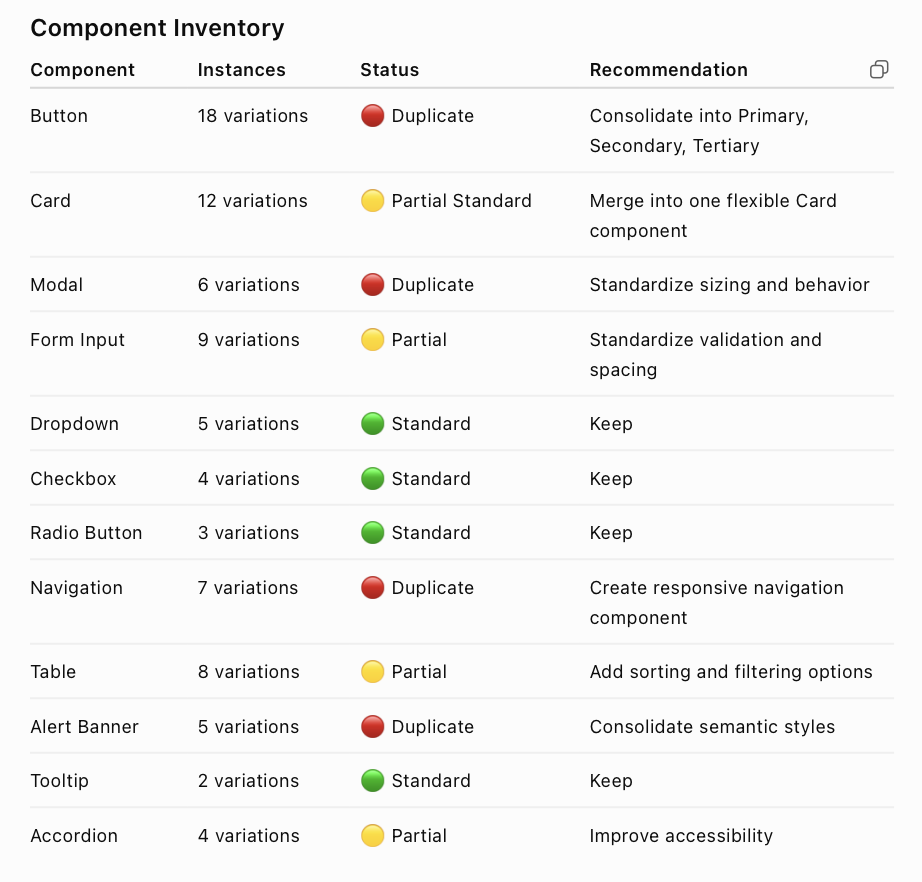
To understand where the greatest opportunities existed, I initiated an enterprise-wide component audit.
The audit evaluated:
Duplicate components
Component usage
Accessibility compliance
Brand consistency
Technical debt
Opportunities for consolidation
Key Findings
Multiple versions of the same components existed.
Teams rebuilt components instead of reusing existing ones.
Accessibility implementation varied significantly.
Hand-coded components slowed releases.
Documentation was inconsistent.
These insights became the foundation for the product strategy & roadmap.
Product Strategy
Rather than treating the initiative as a design project, I positioned the Enterprise Design System as an internal platform product.
The strategy focused on five pillars:
Standardization
Create reusable enterprise components that supported all external websites.
Governance
Introduce contribution guidelines, approval workflows, and version management.
Accessibility
Embed WCAG 2.2 AA compliance into every reusable component.
Scalability
Enable product teams to build faster without sacrificing consistency.
Operational Efficiency
Reduce technical debt and eliminate redundant engineering work.
Roadmap
-
Phase 1
Component audit
Usage analysis
Accessibility assessment
Component prioritization
-
Phase 2
Refresh and modernize existing components
Consolidate duplicate components
Retire obsolete components
Improve documentation
-
Phase 3
Enterprise rollout
Migration support
Training sessions
Governance process
Adoption metrics
Execution
Regular roadmap reviews and governance meetings ensured priorities remained aligned with business goals.
The first release focused on the highest-impact components used across every marketing site.
Component Improvements
Retired 14 obsolete components
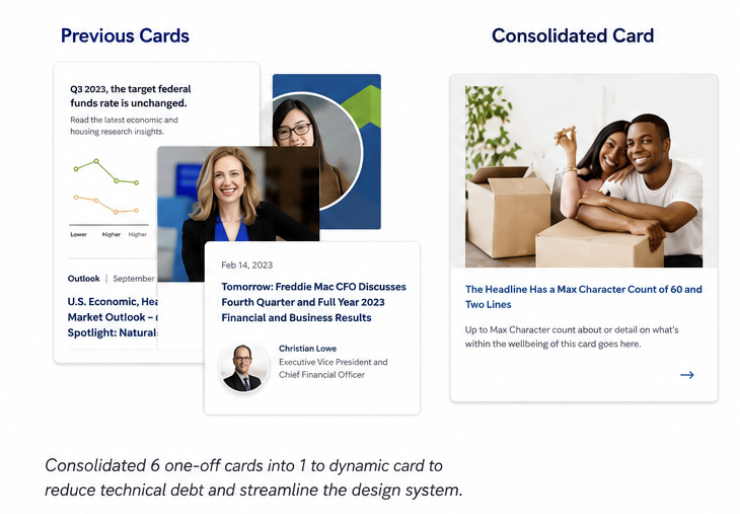
Consolidated 6 duplicate components
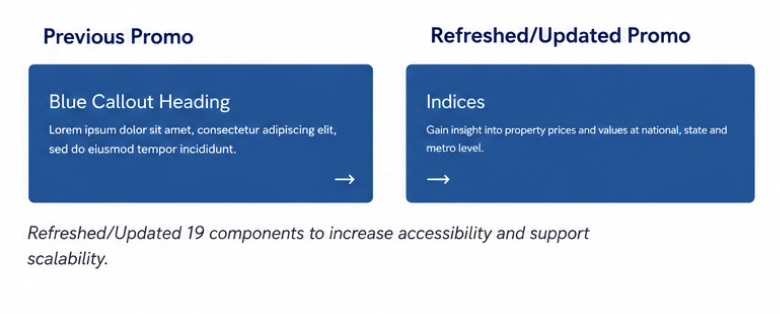
Refreshed 19 enterprise components
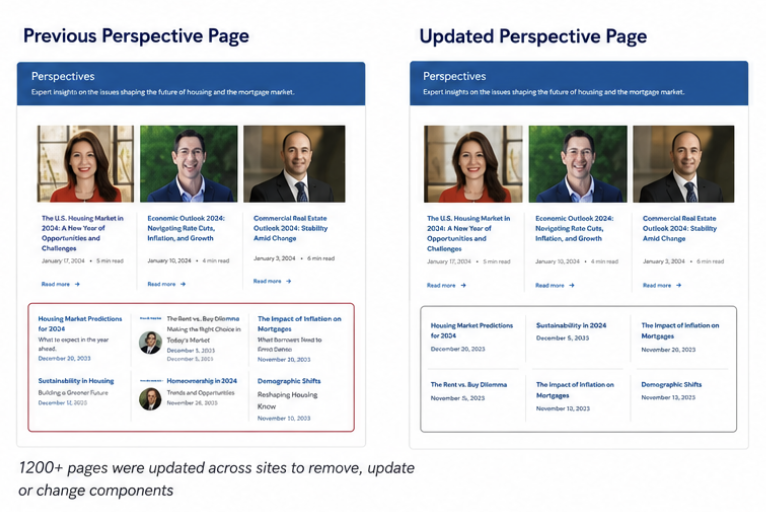
Updated over 1,200 pages
Every reusable component was reviewed for:
Accessibility
Brand consistency
Analytics instrumentation
Documentation
Reusability
Execution & Results
-
14
Obsolete components retired
-
6
Duplicate components consolidated
-
19
Components refreshed
-
1,200+
Pages updated
-
100%
Accessibility compliant