AI Readiness & Answer Engine Optimization (AEO)
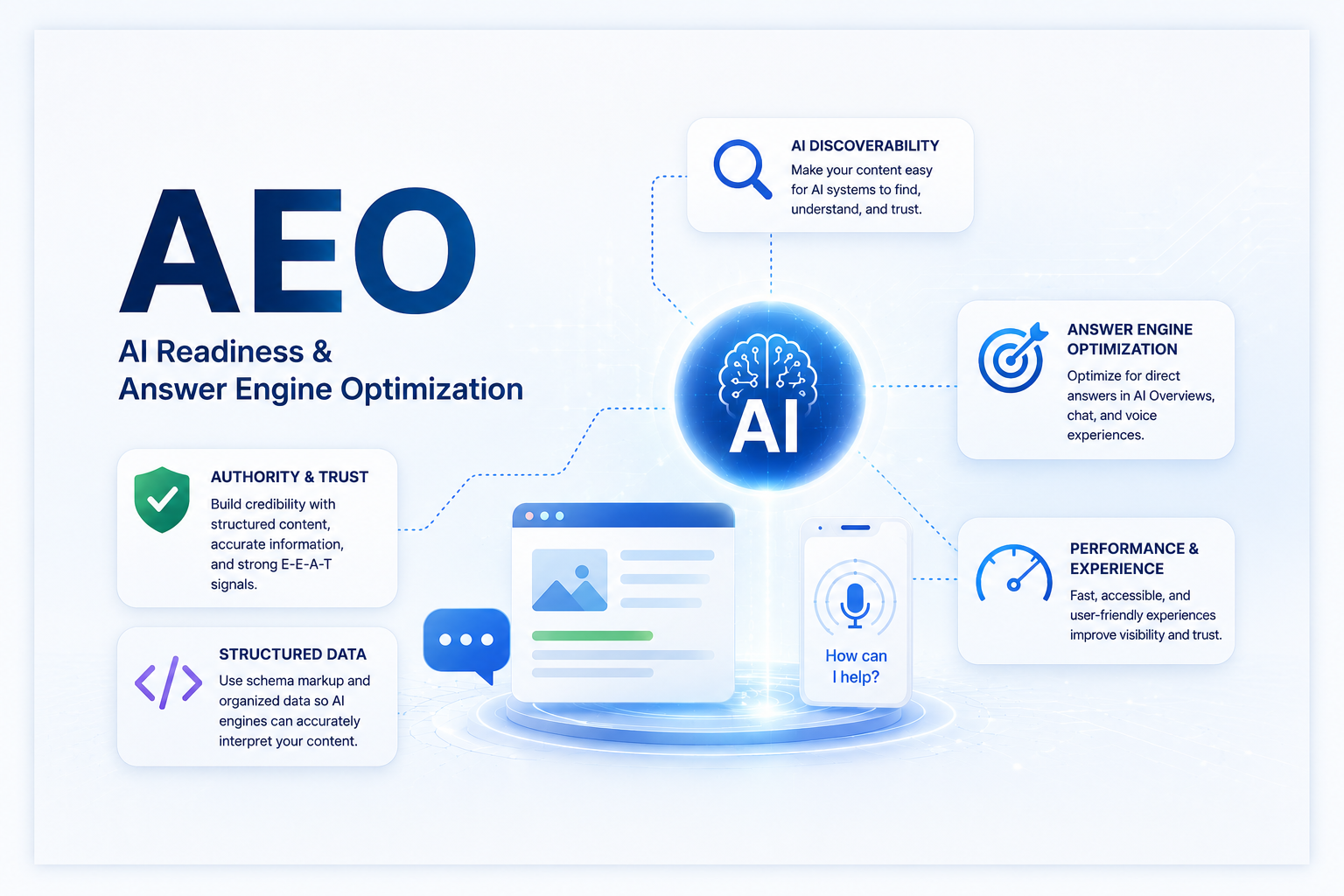
Preparing Freddie Mac's Digital Ecosystem for the Future of AI Search
As AI-powered search experiences like ChatGPT, Gemini, Perplexity, and Google AI Overviews became primary discovery channels, Freddie Mac needed to rethink how its digital properties would be understood—not just by people, but by large language models (LLMs).
I led the strategy for preparing Freddie Mac's enterprise websites for AI-driven discovery by creating a roadmap for AI Readiness and Answer Engine Optimization (AEO). The initiative combined UX strategy, structured content, schema architecture, enterprise design systems, and technical modernization to make our content easier for AI systems to understand, trust, and surface.
The Challenge
Traditional SEO focuses on helping users find websites through search rankings. AI-powered search changes that model by generating answers directly from trusted sources.
Freddie Mac's websites contained valuable information, but much of it lacked the structured data and semantic architecture needed for modern AI systems to:
Understand relationships between content
Accurately classify pages
Generate trusted responses
Surface information in AI-powered search experiences
Without modernization, important housing information risked becoming less discoverable as search behavior evolved.
Goals
The initiative focused on four strategic objectives:
Improve AI and LLM discoverability
Establish enterprise-wide schema standards
Modernize legacy technology to improve performance
Create scalable governance for future AI optimization
My Role
I served as both UX strategist and Product Owner, responsible for defining the enterprise vision and aligning multiple teams around a shared roadmap.
Responsibilities included:
Researching emerging AI search trends
Defining enterprise AI readiness strategy
Competitive analysis
Product roadmap creation
Stakeholder presentations
Requirements gathering
Prioritization
Schema architecture planning
Enterprise design system alignment
Cross-functional collaboration with engineering and SEO teams
Discovery
My research focused on how AI systems discover, interpret, and cite web content.
Key findings included:
AI requires structure—not just content.
Unlike traditional search engines that rely heavily on keywords, LLMs benefit from semantic relationships, structured metadata, and clearly defined entities.
Schema improves machine understanding.
Structured data enables AI systems to understand:
Organizations
Websites
Articles
Financial products
Government programs
Navigation hierarchies
Relationships between content
Technical debt limits AI adoption.
Legacy JavaScript, inconsistent components, and fragmented code increased page weight and reduced maintainability.
These findings shaped a broader modernization strategy rather than isolated SEO improvements.
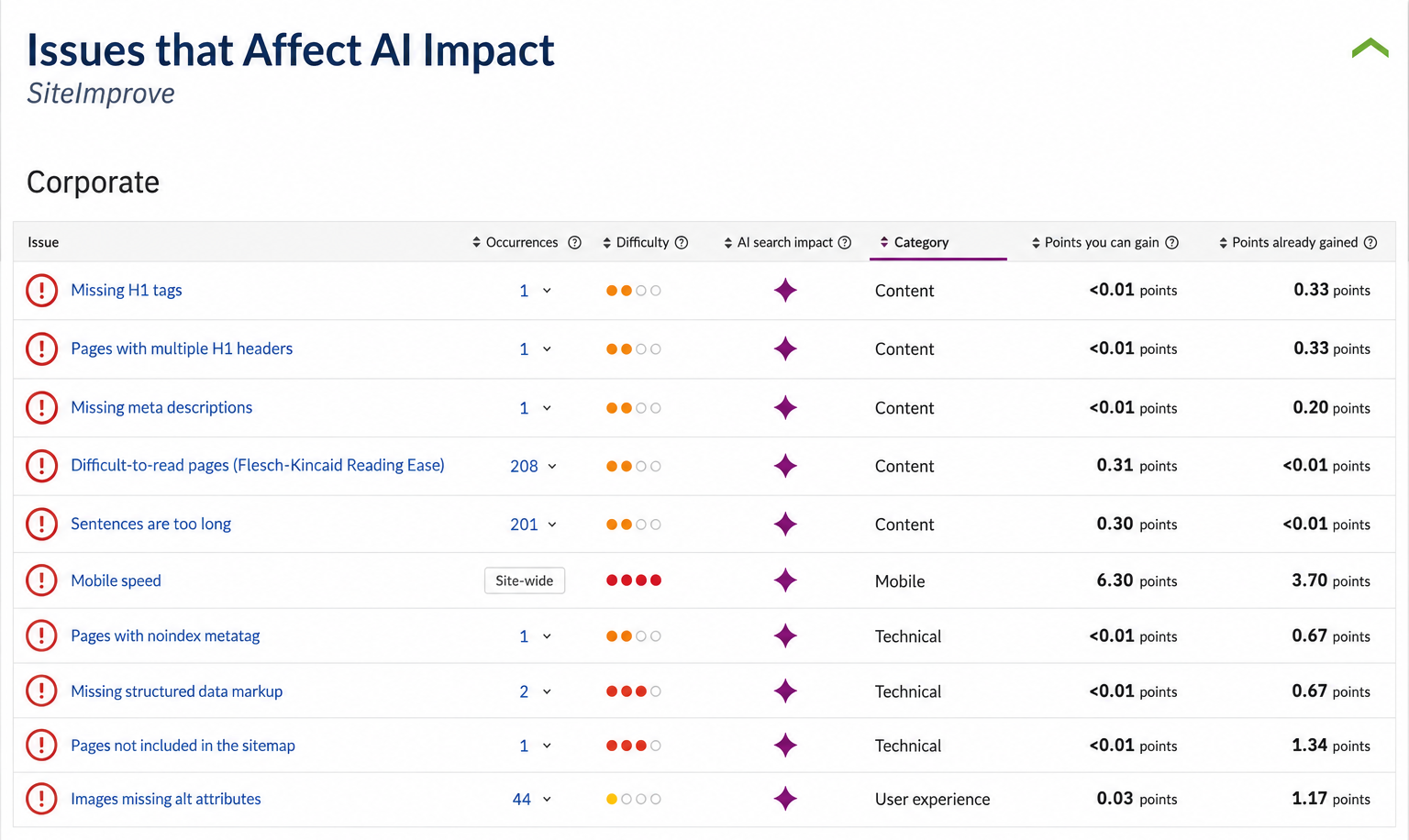
Strategy
I proposed a four-part enterprise roadmap.
1. AI Readiness
Preparing Freddie Mac's digital ecosystem for AI ingestion through:
AI standards
AI crawler policies
llms.txt planning
semantic HTML
structured content
2. Technology Modernization
Reducing technical debt through:
Enterprise component cleanup
Design system standardization
Legacy JavaScript removal
Improved performance
Foundation framework modernization
3. Schema Architecture
Creating scalable schema models across every digital property.
Implemented schema recommendations for:
Organization
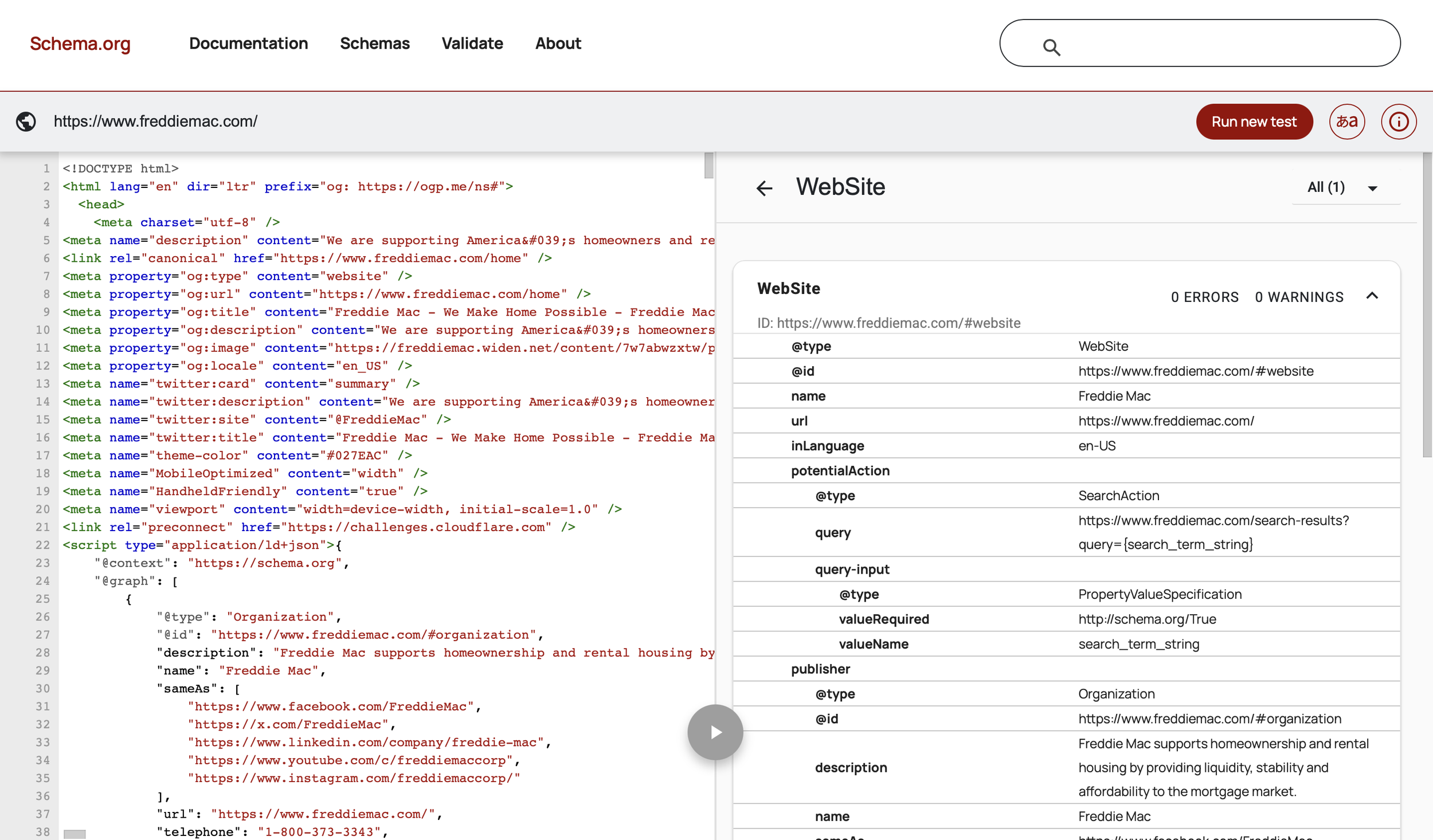
Website
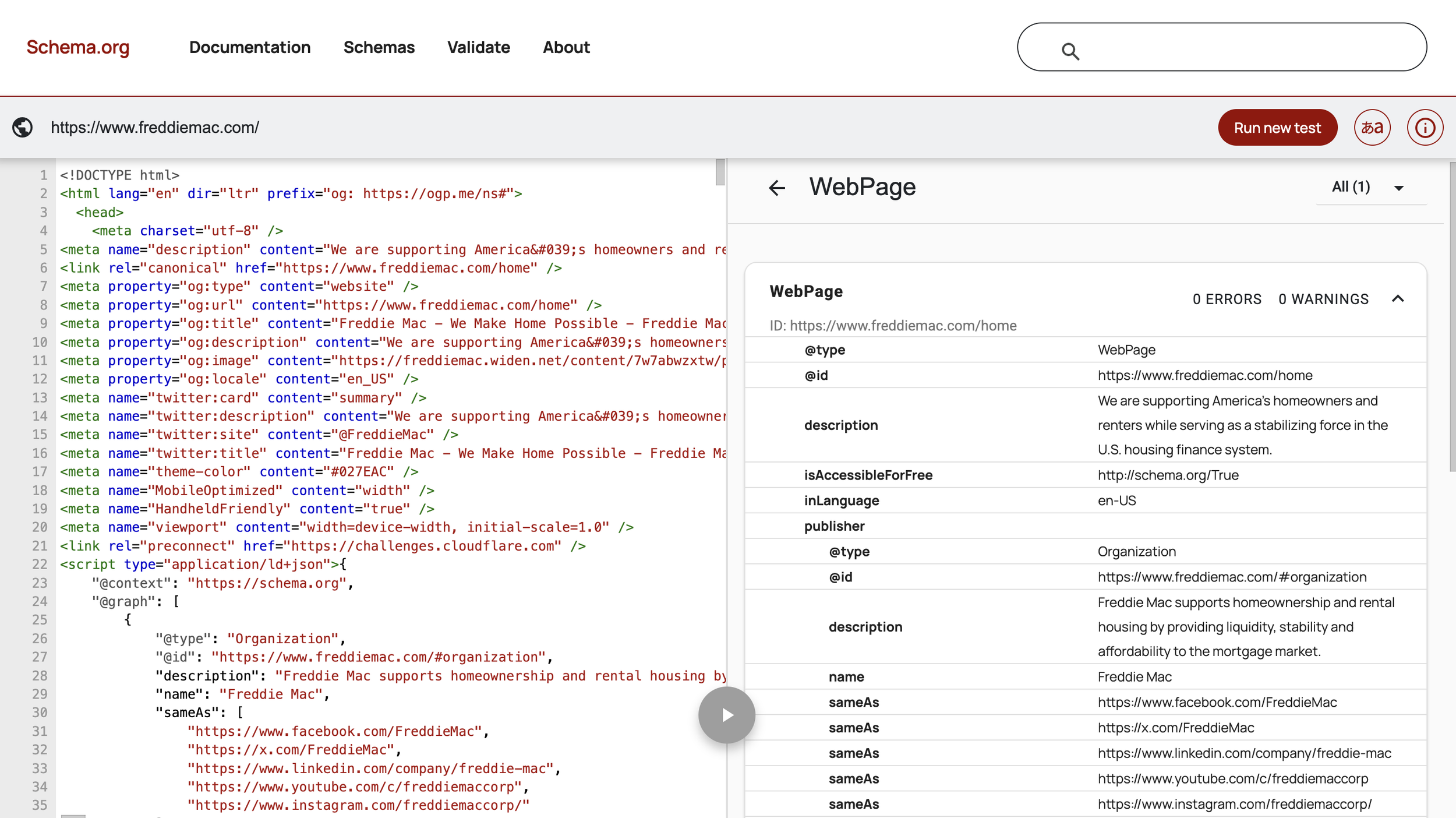
WebPage
Breadcrumb
Article
News
Blog
Research
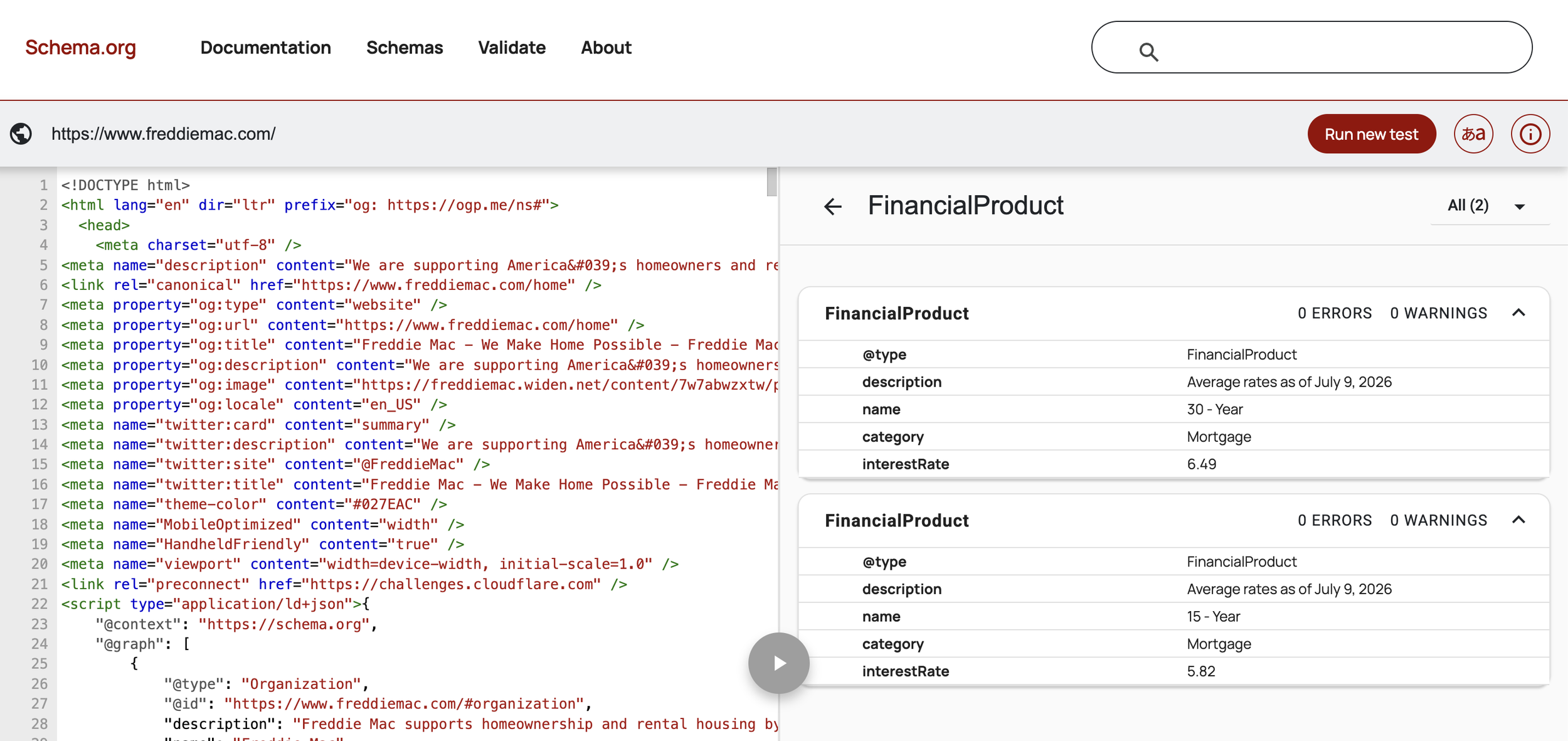
Mortgage products
Government assistance programs
Each schema type included reusable implementation guidance for engineering teams.
4. Content Optimization
Prepared content to better support:
AI Overviews
Voice Search
ChatGPT
Gemini
Perplexity
Answer Engine Optimization (AEO)
Generative Engine Optimization (GEO)
Roadmap
-
Phase 1
Enterprise schema enablement
Basic schema
Organization
Website
WebPage
-
Phase 2
Customized & site-specific schema implementations for:
Mortgage Rates
Research Articles
DPA One
Financial Products
-
Phase 3
Component modernization
Updating the enterprise design system and reusable CMS components to support structured data automatically.
-
Phase 4
Framework modernization
Replacing legacy JavaScript architecture with modular components that reduced unnecessary code and improved performance.
Schema Implementation
-
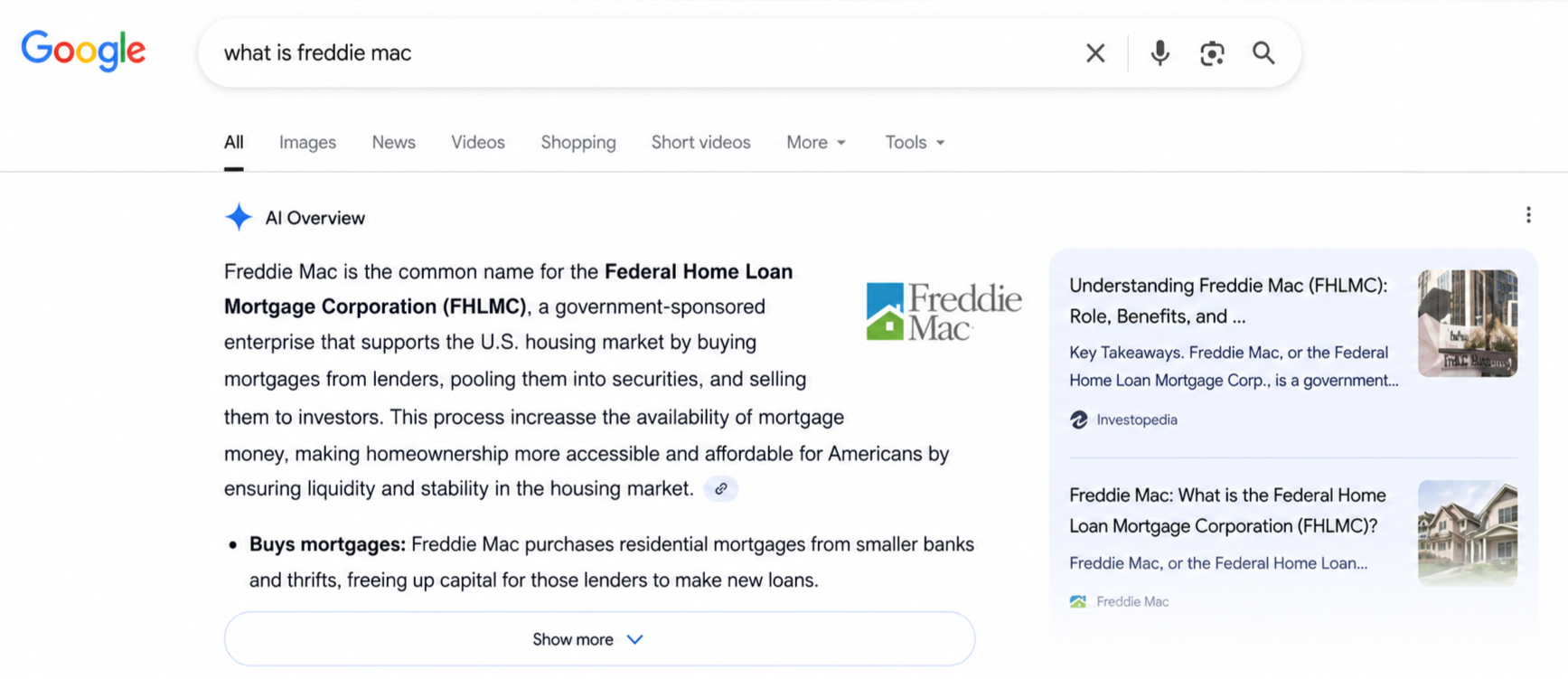
Before
When searching for Freddie Mac the old logo and outdated information were being served to search engines before AI schema enablement. In addition a 3rd party (Investopedia) is at the top of the list.
-
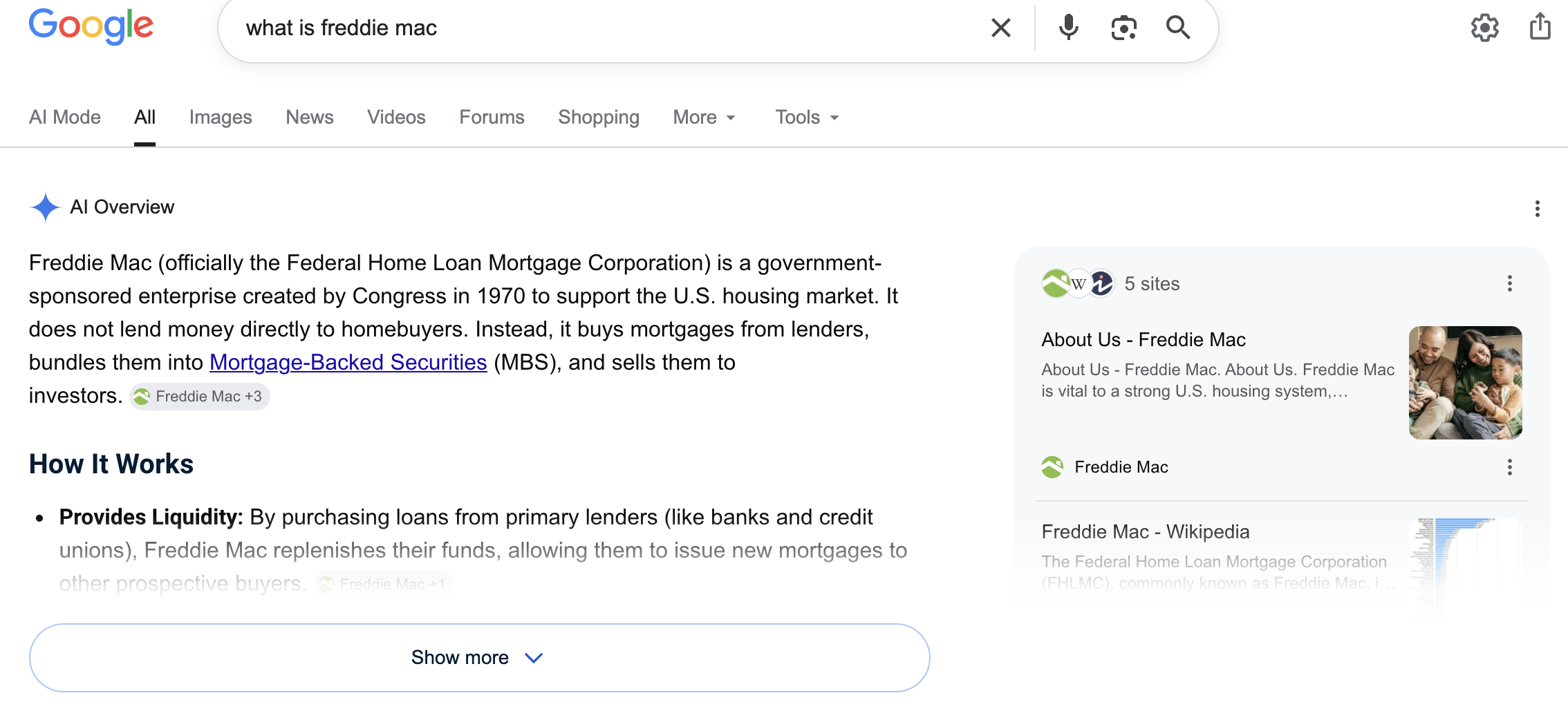
After
Freddie Mac is now at the top of the list and the quoted source. In addition, the information is up to date per the website.
Impact
Although implementation was phased over time, the strategy was designed to deliver long-term benefits including:
Better AI discoverability
Making Freddie Mac content easier for LLMs to interpret and cite.
Improved search visibility
Supporting traditional SEO alongside AI-first discovery experiences.
Faster websites
Reducing technical debt through component modernization and optimized JavaScript delivery.
Better content governance
Creating reusable standards for structured content across enterprise websites.
Scalable design system
Embedding schema into reusable CMS components to reduce implementation effort.
Future-ready architecture
Preparing Freddie Mac's digital ecosystem for evolving AI search technologies without requiring extensive redesigns.

This project reinforced that designing for AI is not about optimizing prompts—it's about designing information systems.
The most impactful work happened at the intersection of UX, content strategy, engineering, and product management. By combining structured data, scalable design systems, and enterprise governance, we laid the foundation for digital experiences that are easier for both people and AI to understand.